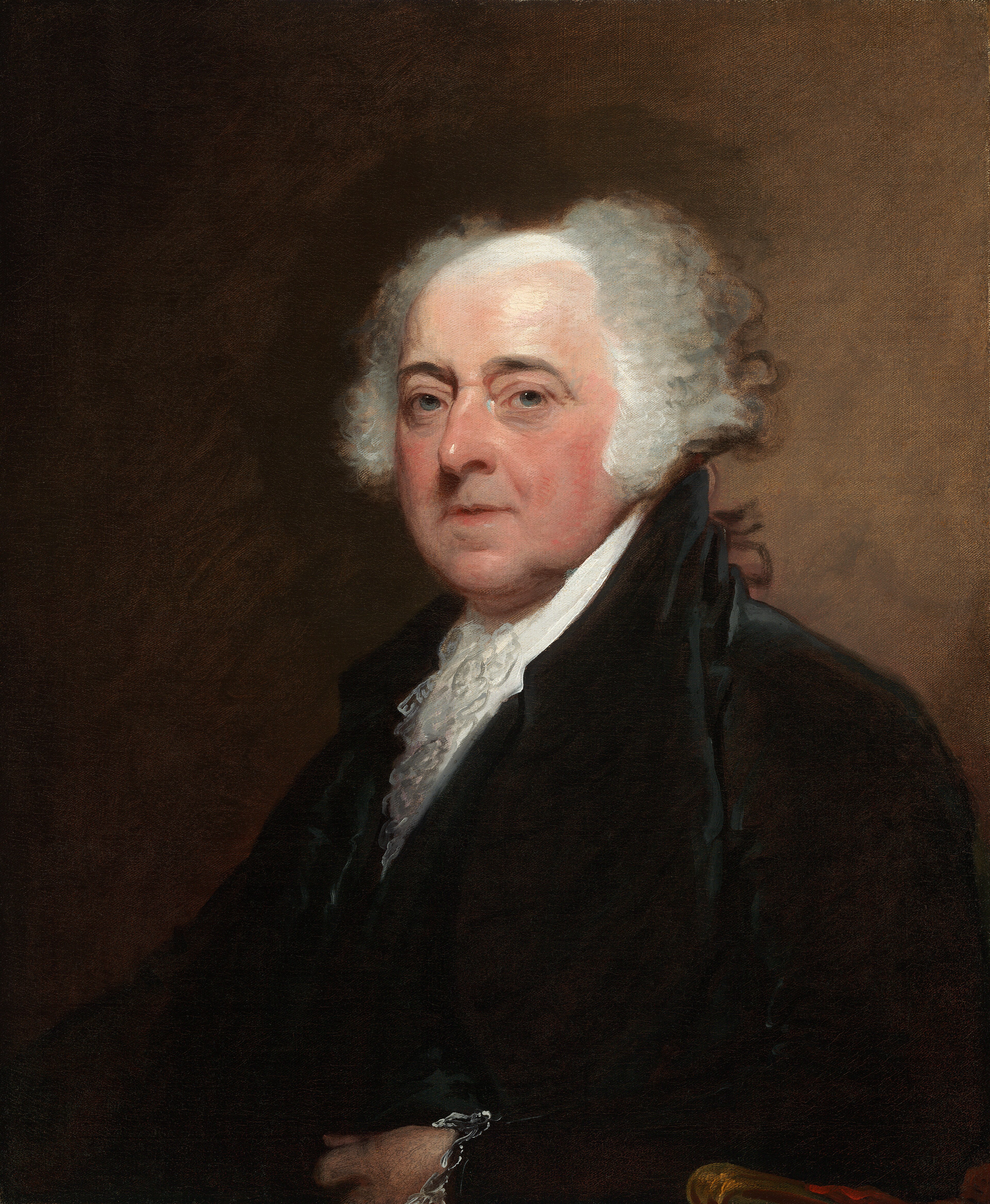
Adams was an institutionalist lawyer above all — anti-faction, anti-mob, committed to rule of law and Discourses on Davila's warning against demagogues inflaming the public against institutions.46 Paxton's impeachment, forum-shopping, and personal-attack campaign style are precisely the demagogic mode Adams warned against; Talarico's institutionalism fits Adams's framework with deductions for expanded federal government and populist economic rhetoric.
Issue
Paxton
Talarico
Rule of law / Boston Massacre defense (1770)
Hurts
Helps
Paxton: Hurts · Talarico: Helps
Adams defended the British soldiers at the Boston Massacre because rule of law required competent representation for unpopular defendants; Paxton's prosecutorial mode of treating disfavored institutions (CAIR, EPIC, Annunciation House) as targets runs against that ethic, while Talarico's institutionalist framing tracks Adams directly.
'Facts are stubborn things'
Hurts
Helps
Paxton: Hurts · Talarico: Helps
Adams's line in the Boston Massacre defense — 'facts are stubborn things' — frames legal argument as evidence-bound; Paxton's Tribune/ProPublica-documented forum-shopping5 and personal-attack primary style substitute political theatrics for factual argument, while Talarico's evidence-bound legislative arguments on healthcare, education funding, and church-state law sit on Adams's evidence-grounded side.
Anti-faction / anti-mob
Hurts
Helps
Paxton: Hurts · Talarico: Helps
Adams was deeply anti-faction, anti-mob, and anti-French-Revolution-extremism; Paxton's primary-campaign mobilization against a sitting Republican senator runs against that, while Talarico's anti-faction framing and civility outreach sit on Adams's side of the line.
Discourses on Davila (anti-demagogue)
Hurts
Helps
Paxton: Hurts · Talarico: Helps
Discourses on Davila warns specifically against demagogues who would inflame the public against institutions; Paxton's mode of running against the institutions of his own party and state is the precise pattern Adams identified, while Talarico's institutionalist defense of those same institutions sits on Adams's anti-demagogue side.
Forum-shopping (Tribune/ProPublica)
Hurts
—
Paxton: Hurts · Talarico: —
Adams's standard for legal process treats venue manipulation as a corruption of the form; Paxton's Tribune/ProPublica-documented forum-shopping5 is Adams's nightmare scenario in operational form. Talarico is a legislator rather than a litigator and has no equivalent venue-manipulation record to score on this specific litigation-process row.
Attorney general following ethics rules
Hurts
—
Paxton: Hurts · Talarico: —
Adams would consider an attorney general who can't follow professional ethics rules personally disqualifying; Paxton's impeachment for abuse of office4 and the State Bar disciplinary actions are exactly that disqualification. Talarico is not the attorney general and has no equivalent professional-ethics exposure to score on this specific AG-conduct row.
Term limits + SCOTUS ethics code
Hurts
Helps
Paxton: Hurts · Talarico: Helps
Adams treated institutional self-restraint and ethical structure as the spine of republican government; Talarico's term-limits push and SCOTUS ethics code framework2 apply that principle directly, while Paxton has not campaigned on term limits or judicial-ethics structure and his record runs against the institutional-restraint principle the row scores.
Refusal of corporate PAC money
Hurts
Helps
Paxton: Hurts · Talarico: Helps
Adams was suspicious of private interest capturing public office; Talarico's refusal to take corporate PAC money2 is a clean application of that suspicion, while Paxton's reliance on conventional corporate and donor-class fundraising sits on the opposite side of this narrow-interest test.
Expanded federal government
Helps
Hurts
Paxton: Helps · Talarico: Hurts
Adams was constitutionally cautious about scope of federal authority outside its enumerated grounds; Talarico's expanded federal economic agenda costs him points on this axis, while Paxton's litigation record against federal economic expansions1 sits on Adams's restrained-scope side of this row.
Populist economic rhetoric
Hurts
Hurts
Paxton: Hurts · Talarico: Hurts
Adams considered populist rhetoric inconsistent with prudent institutional restraint; Talarico's populist economic framing costs him ground on this axis, while Paxton's MAGA-aligned anti-elite economic rhetoric1 is its own form of populist mode Adams's institutional-restraint ethic explicitly rejects.
Sources
- Ken Paxton for U.S. Senate, official campaign issues page, accessed May 2026. (full list)
- Talarico for Texas, official campaign issues pages (taxes, education, healthcare, immigration, social media/AI, freedom-family-faith, public-safety-justice, corruption-democracy, labor-business), accessed May 2026. (full list)
- Patrick Svitek, 'Ken Paxton emerges victorious from yet another career scandal,' Texas Tribune, Sept. 17, 2023. (full list)
- Texas Tribune / ProPublica, 'Paxton files lawsuits in courts that could have more favorable outcomes,' May 20, 2026. (full list)
- John Adams, defense of British soldiers at Boston Massacre trial (1770); Adams-Jefferson correspondence (1812-1826); Discourses on Davila (1790-1791) on faction; 'facts are stubborn things' (Boston Massacre defense). (full list)