Scoring · Founding fathers
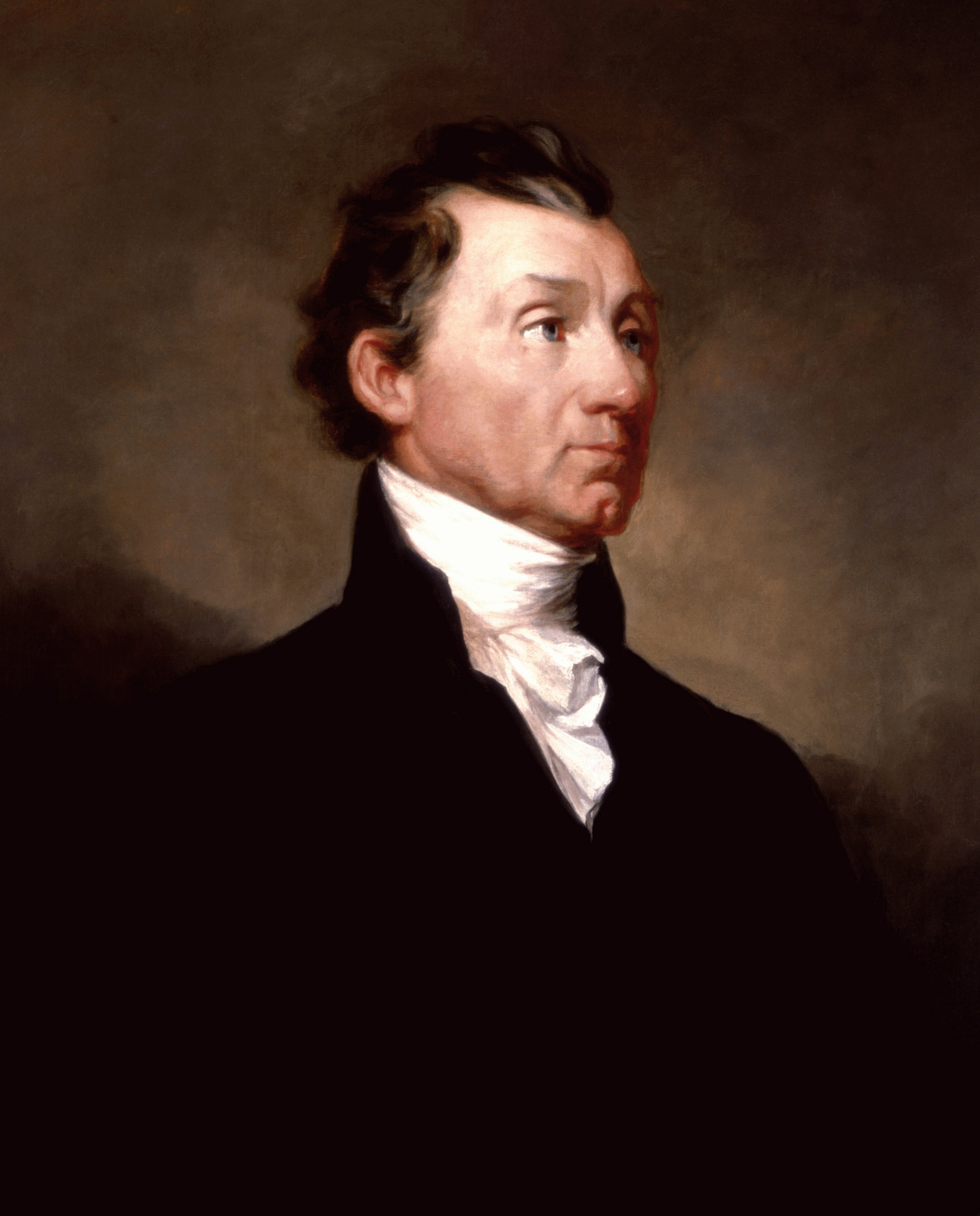
Monroe, James
1817–1825
Samuel Finley Breese Morse. Public domain via Wikimedia Commons.
Monroe presided over the 'Era of Good Feelings' national-unity period and authored the Monroe Doctrine's defense of democratic neighbors from imperial interference.51 Paxton's primary-campaign factionalism runs hard against Monroe's national-unity ethos, while Talarico's alliance-restoration foreign policy and anti-faction framing track Monroe's framework with deductions for expanded federal government and more confrontational rhetoric.
Issue
Paxton
Talarico
Era of Good Feelings (national unity)
Hurts
Helps
Paxton: Hurts · Talarico: Helps
Monroe's administration was a deliberate national-unity orientation after the bitter Federalist-Republican factionalism of the Adams and Jefferson eras; Paxton's primary-campaign assault on a sitting Republican senator runs hard against that ethos, while Talarico's civility outreach (the 'coffee with the NRA member' posture) sits closer to the Era-of-Good-Feelings tone.
Monroe Doctrine (1823)
Hurts
Helps
Paxton: Hurts · Talarico: Helps
The Monroe Doctrine established American protection of democratic neighbors from European imperial interference; the modern analog is alliance restoration and defense of democratic neighbors, which is closer to Talarico's framework than to the MAGA isolationism Paxton aligns with.
Missouri Compromise (legislative-bargain analog: deal-making vs. scorched-earth)
Hurts
Helps
Paxton: Hurts · Talarico: Helps
The Missouri Compromise was a distasteful legislative bargain Monroe accepted to preserve the union over principled rupture; the modern analog is willingness to legislate half-loaf deals rather than fight scorched-earth on every contested issue. Paxton's mode is the opposite — lawsuit-first politics, primary-challenging a sitting Republican incumbent, and the scorched-earth impeachment fight — while Talarico's legislative posture leans into cross-aisle deal-making and institutional preservation. This is distinct from the rhetorical national-unity row above, which scores tone rather than deal-making.
Modest federal expansion / constitutional restraint
Helps
Hurts
Paxton: Helps · Talarico: Hurts
Monroe expanded the federal government modestly while maintaining founding-era constitutional restraint; Talarico's expanded federal economic agenda costs him points against that restrained baseline, while Paxton's litigation record against federal economic expansions sits on the restrained-scope side of this specific row.
Defense of democratic institutions
Hurts
Helps
Paxton: Hurts · Talarico: Helps
Monroe's frame treated stable democratic institutions as the basis of national strength; Talarico's defense of democratic institutions and anti-corruption package2 apply that frame, while Paxton's Texas v. Pennsylvania election-result challenge and abuse-of-office impeachment cut against the institutional-stability frame on this specific row.
Anti-faction / anti-corruption
Hurts
Helps
Paxton: Hurts · Talarico: Helps
Monroe's national-unity orientation made faction-suppression a defining political mode; Paxton's primary-campaign factionalism cuts against that, while Talarico's anti-faction anti-corruption package aligns with Monroe's stance.
Confrontational rhetorical mode
Hurts
Hurts
Paxton: Hurts · Talarico: Hurts
Monroe's deliberate national-unity orientation discouraged confrontational rhetoric even where the underlying policy was sound; Talarico's more confrontational moments cost him points on this axis, while Paxton's primary-campaign personal-attack mode sits even further from Monroe's rhetorical restraint.
Sources
- Ken Paxton for U.S. Senate, official campaign issues page, accessed May 2026. (full list)
- Talarico for Texas, official campaign issues pages (taxes, education, healthcare, immigration, social media/AI, freedom-family-faith, public-safety-justice, corruption-democracy, labor-business), accessed May 2026. (full list)
- James Monroe, Annual Message to Congress, Dec. 2, 1823 (Monroe Doctrine); Missouri Compromise (1820); Era of Good Feelings administration (1817-1825). (full list)