Scoring · Founding fathers
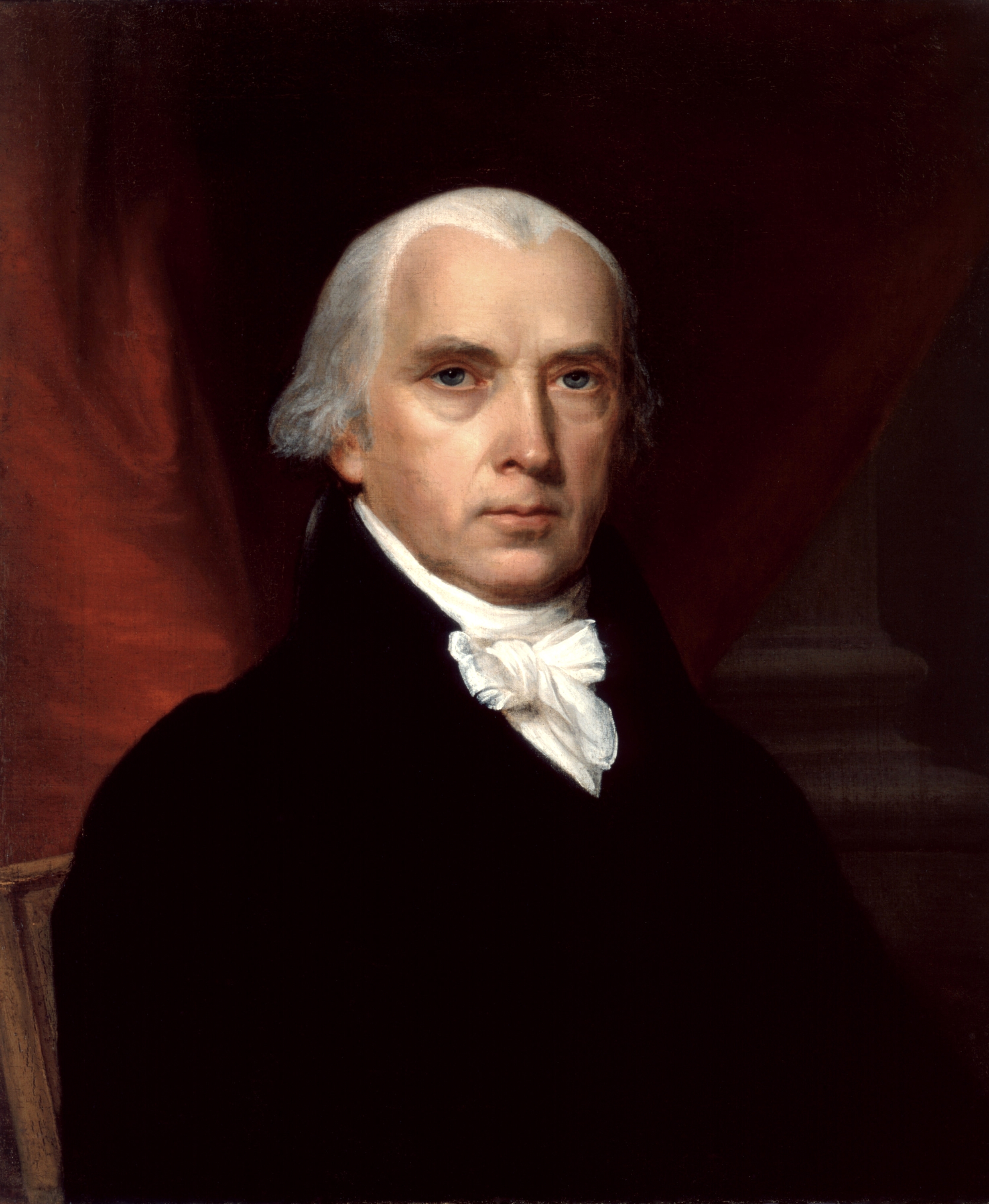
Madison, James
1809–1817
John Vanderlyn. Public domain via Wikimedia Commons.
Madison's Memorial and Remonstrance (1785) is the founding document of American church-state separation thought, and Federalist No. 10 is the canonical warning against factional spirit.50 Madison's documented framework anathematizes Paxton's Ten Commandments mandates and factional primary campaign, while Talarico's church-state separation and institutional restraint align directly — with a Hamiltonian-centralization deduction for Talarico's expanded federal economic policy.
Issue
Paxton
Talarico
Memorial and Remonstrance (1785)
Hurts
Helps
Paxton: Hurts · Talarico: Helps
Madison wrote the Memorial specifically to defeat a Virginia tax for Christian ministers, arguing 'religion is wholly exempt' from civil government; Paxton's Ten Commandments program is exactly the kind of state-religious establishment the Memorial was written to stop, while Talarico's church-state separation tracks the Memorial directly.
'The same authority which can establish Christianity...'
Hurts
Helps
Paxton: Hurts · Talarico: Helps
Madison warned that 'the same authority which can establish Christianity, in exclusion of all other religions, may establish with the same ease any particular sect of Christians' — Paxton's Ten Commandments mandate is the precise hazard Madison identified, while Talarico's seminarian-grounded opposition to that same Christianity-establishment power sits squarely on Madison's side of the warning.
Ten Commandments / state-mandated religious displays
Hurts
Helps
Paxton: Hurts · Talarico: Helps
Madison's Memorial is a point-by-point philosophical refutation of state-mandated religious displays; Paxton champions Texas's Ten Commandments law, while Talarico has campaigned against such displays on the explicitly Madisonian ground.
Federalist No. 10 (faction)
Hurts
Helps
Paxton: Hurts · Talarico: Helps
Federalist 10 warns against factional spirit; Paxton's primary campaign against a sitting Republican senator embodies precisely that factionalism, while Talarico's anti-faction anti-corruption package tracks Madison's institutional design.
Trinity Episcopal Church veto (1811)
Hurts
Helps
Paxton: Hurts · Talarico: Helps
Madison as president vetoed the incorporation of Trinity Episcopal Church on church-state grounds — even a benign-seeming religious incorporation was too close to establishment for him; Paxton's program of state-favored Christianity sits at the opposite pole, while Talarico's strict-separation framing tracks Madison's even-benign-establishment-too-close standard.
Institutional restraint / SCOTUS ethics framework
Hurts
Helps
Paxton: Hurts · Talarico: Helps
Madison was the founders' chief architect of careful institutional restraint; Talarico's SCOTUS ethics code and term-limits framing2 apply that restraint mode, while Paxton's impeachment for abuse of office and forum-shopping record run against the institutional-restraint ethic Madison built.
'Most vocal defender of church-state separation' positioning
Hurts
Helps
Paxton: Hurts · Talarico: Helps
Madison built American church-state separation thought as a public-facing argument; Talarico's explicit positioning as Texas's most vocal defender of that separation is a direct heir to that framing, while Paxton's public advocacy for Ten Commandments mandates and state-favored Christianity is the inverse public-facing posture.
Expanded federal economic policy
Helps
Hurts
Paxton: Helps · Talarico: Hurts
Madison and Jefferson opposed Hamiltonian centralization; Talarico's expanded federal economic policy is the kind of centralization Madison would push back on, while Paxton's litigation record against federal economic expansions sits on Madison's decentralized side of this specific economic-scope row.
Sources
- Ken Paxton for U.S. Senate, official campaign issues page, accessed May 2026. (full list)
- Talarico for Texas, official campaign issues pages (taxes, education, healthcare, immigration, social media/AI, freedom-family-faith, public-safety-justice, corruption-democracy, labor-business), accessed May 2026. (full list)
- CNN interview, April 2026; Breitbart coverage of Paxton-Talarico exchange, April 23, 2026. (full list)
- James Madison, Memorial and Remonstrance Against Religious Assessments (1785); Federalist No. 10 on faction; principal authorship of the Bill of Rights (1789); opposition to incorporation of Trinity Episcopal Church (1811 veto). (full list)