Scoring · Later presidents
Roosevelt, Franklin D.
1933–1945
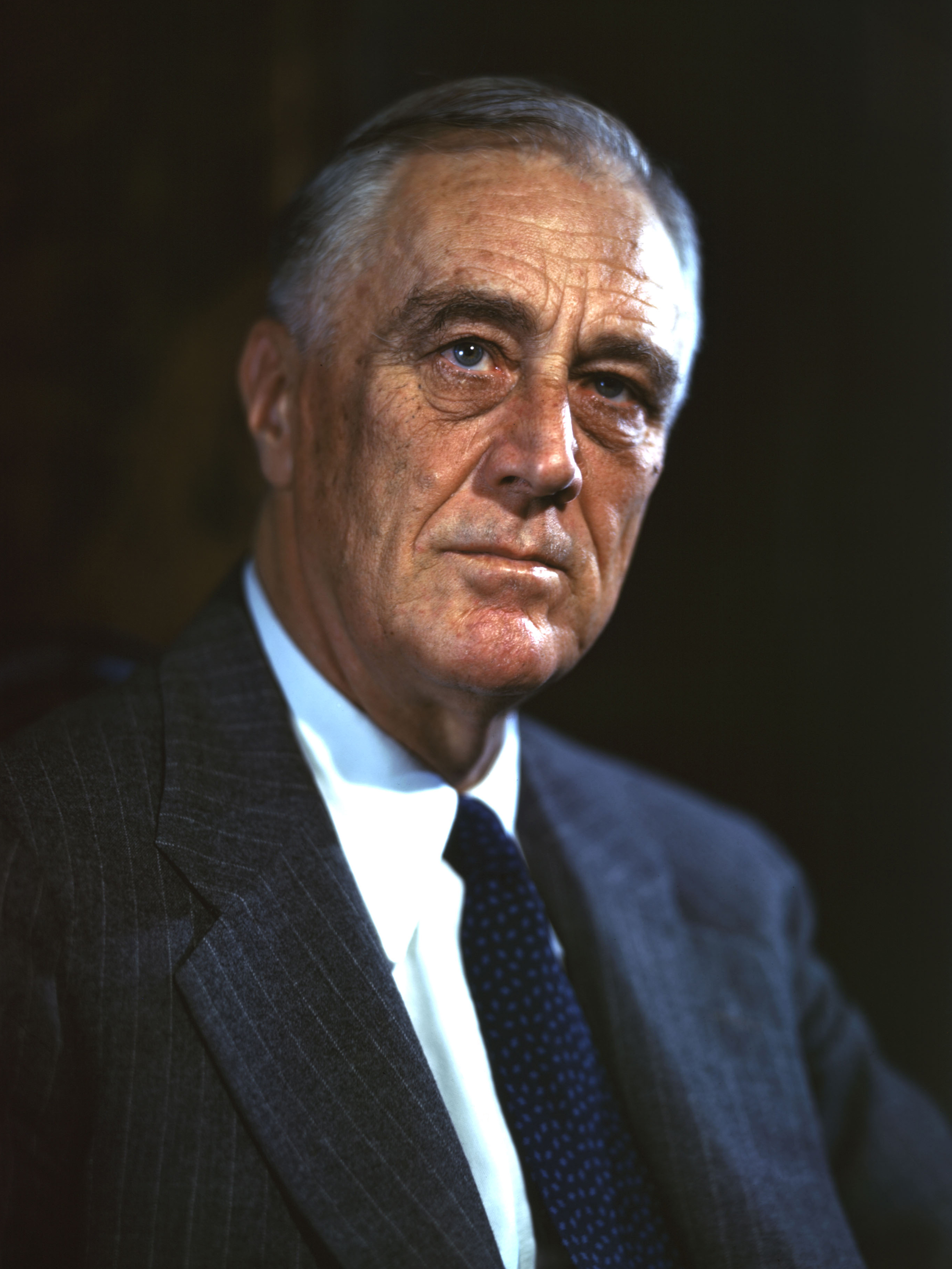
Leon Perskie. CC BY 2.0 via Wikimedia Commons.
FDR's framework — New Deal social insurance and labor protections, Four Freedoms economic rights, and Atlantic Charter alliance-building — is the most expansive defense of activist federal government in American presidential history. Paxton's anti-union, anti-Medicaid, anti-ESG, and MAGA-isolationist record runs against virtually every dimension of it, while Talarico's platform reads like a modern FDR-tradition policy document despite a social-policy and executive-restraint gap.
Issue
Paxton
Talarico
Social Security / social insurance
Hurts
Helps
Paxton: Hurts · Talarico: Helps
FDR built Social Security as the foundational social-insurance program; Paxton's opposition to Medicaid expansion and OBBBA cuts to social insurance hit the framework FDR built, while Talarico's Medicare buy-in2 extends the same social-insurance logic.
Wagner Act / collective bargaining
Hurts
Helps
Paxton: Hurts · Talarico: Helps
The Wagner Act made collective bargaining federal policy; Paxton's anti-union AG litigation against NLRB rulings is the precise opposite of that tradition, while Talarico's PRO Act support2 is its direct lineage.
Fair Labor Standards Act (minimum wage, overtime)
Hurts
Helps
Paxton: Hurts · Talarico: Helps
FLSA established federal minimum wage and overtime; Talarico's $15 federal minimum-wage support2 is direct FLSA lineage, while Paxton's litigation against federal overtime expansion and broader anti-wage-floor posture cuts against the FLSA tradition on this specific row.
SEC / securities regulation
Hurts
Helps
Paxton: Hurts · Talarico: Helps
FDR's SEC created federal securities regulation; Talarico's banking and PBM-regulation agenda2 maps to the SEC tradition, while Paxton's anti-ESG investigations and broader anti-financial-regulation litigation work against the SEC's regulatory mandate on this row.
Glass-Steagall / banking regulation
—
Helps
Paxton: — · Talarico: Helps
Glass-Steagall separated commercial and investment banking; Talarico's banking-regulation framing tracks that regulatory tradition. Paxton has not engaged banking-structure regulation as a target and is a non-factor on this row.
TVA / public-power conservation
Hurts
Helps
Paxton: Hurts · Talarico: Helps
TVA paired electrification with conservation as federal infrastructure; Paxton's anti-ESG and BlackRock litigation defending coal cuts against the TVA conservation tradition, while Talarico's conservation-friendly energy plan and rural-broadband framing2 tracks the public-investment lineage.
CCC / WPA / public works
—
Helps
Paxton: — · Talarico: Helps
CCC and WPA were federal jobs-and-infrastructure programs; Talarico's infrastructure and rural investment agenda2 is the modern CCC/WPA/REA continuation. Paxton has not run on a federal jobs-and-public-works program on this specific row.
Four Freedoms (freedom from want as positive economic right)
Hurts
Helps
Paxton: Hurts · Talarico: Helps
FDR's 1941 Four Freedoms included 'freedom from want' as a positive economic right; Paxton's record opposes the social-insurance expansions that operationalize freedom from want, while Talarico's healthcare-as-right framing2 is its modern instantiation.
Atlantic Charter / Lend-Lease alliance-building
Hurts
Helps
Paxton: Hurts · Talarico: Helps
FDR built American foreign policy on Lend-Lease and Atlantic Charter alliance-building; Paxton's MAGA tariff-and-isolationism posture with Ukraine-aid skepticism cuts against that internationalism, while Talarico's alliance-restoration foreign policy2 maps to FDR's wartime diplomacy.
Economic oligarchy as threat to democracy
Hurts
Helps
Paxton: Hurts · Talarico: Helps
FDR explicitly treated private power growing 'stronger than their democratic state' as the threat to democratic liberty; Talarico's stock buyback tax and antitrust expansion2 echo FDR's late-administration anti-monopoly turn, while Paxton's selective antitrust enforcement and broader alignment with concentrated corporate power run against FDR's anti-oligarchy framing on this row.
Personal social conservatism
Helps
Hurts
Paxton: Helps · Talarico: Hurts
Executive-overreach record (Japanese internment, court-packing, refugee turn-aways)
Hurts
Hurts
Paxton: Hurts · Talarico: Hurts
FDR's institutional record — Japanese internment, the 1937 court-packing fight, the Jewish refugee turn-aways — includes precisely the kind of executive overreach an institutionalist tradition treats as cautionary; Talarico loses ground on the FDR-aligned executive-power side of his agenda, while Paxton's own abuse-of-office record reproduces the FDR-era overreach pattern from the state-AG seat.
Sources
- Ken Paxton for U.S. Senate, official campaign issues page, accessed May 2026. (full list)
- Talarico for Texas, official campaign issues pages (taxes, education, healthcare, immigration, social media/AI, freedom-family-faith, public-safety-justice, corruption-democracy, labor-business), accessed May 2026. (full list)
- Gospel of Matthew 25:31-46 (NRSV-UE), the Judgment of the Nations: 'I was hungry and you gave me food, I was a stranger and you welcomed me, I was sick and you took care of me, I was in prison and you visited me' — the most cited Jesus passage on social ethics. (full list)