Scoring · Later presidents
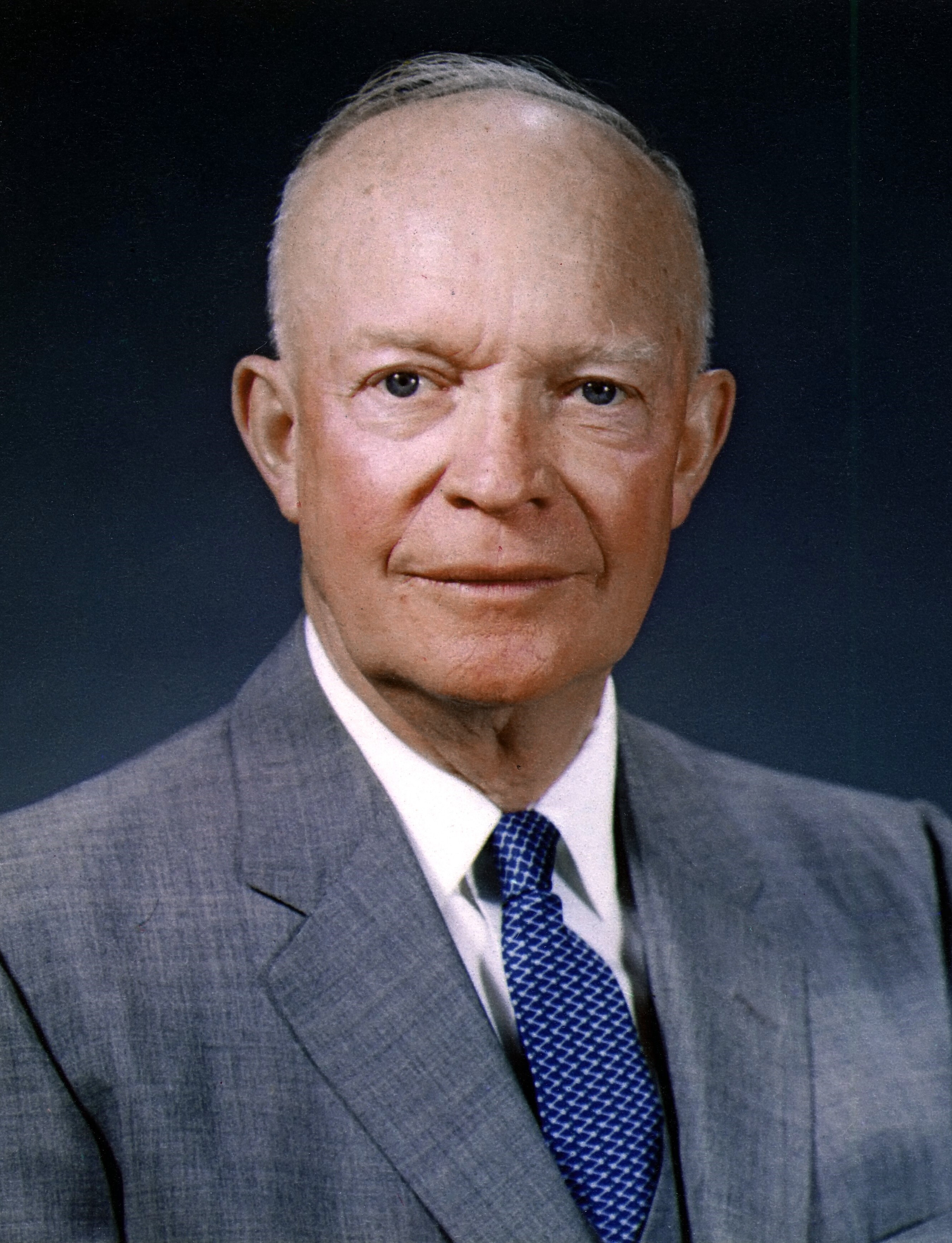
Eisenhower, Dwight
1953–1961
White House. Public domain via Wikimedia Commons.
Eisenhower's framework — consensus governance, anti-faction temperament, infrastructure and civil-rights advances, alliance-keeping, and fiscal responsibility paired with New Deal preservation — runs hard against Paxton's record outside of national-defense framing, while Talarico tracks Eisenhower on most institutional axes despite a more progressive economic agenda Ike would dislike.
Issue
Paxton
Talarico
Interstate highway system / infrastructure investment
Hurts
Helps
Paxton: Hurts · Talarico: Helps
Ike built the interstate highway system as the canonical federal-infrastructure project; Paxton has not campaigned on infrastructure spending and his anti-federal-investment posture cuts against the tradition, while Talarico's infrastructure agenda2 is its modern continuation.
Signed civil rights legislation
Hurts
Helps
Paxton: Hurts · Talarico: Helps
Eisenhower signed the 1957 and 1960 Civil Rights Acts and sent troops to Little Rock; Paxton's record opposing voting-rights expansion and prosecuting religious minorities cuts against that lineage, while Talarico's John Lewis VRA and voting-rights advocacy2 track it directly.
Farewell warning on the military-industrial complex
—
Helps
Paxton: — · Talarico: Helps
Ike's farewell warned against unchecked private power inside the defense establishment; Talarico's anti-corruption and concentrated-power framing2 tracks that warning. Paxton has not staked out a defense-contractor accountability position on this specific axis.
Kept New Deal intact / social-program preservation
Hurts
Helps
Paxton: Hurts · Talarico: Helps
Ike preserved the New Deal rather than rolling it back; Paxton's OBBBA-cuts posture and Medicaid-expansion opposition cut against that preservation instinct, while Talarico's Medicare buy-in and social-insurance expansion2 is the modern preservation-and-extension position.
Consensus governance
Hurts
Helps
Paxton: Hurts · Talarico: Helps
Ike governed by consensus and prized institutional collaboration; Paxton's faction-first primary strategy cuts against the consensus tradition, while Talarico's civility and cross-aisle framing tracks it.
Anti-factionalism
Hurts
Helps
Paxton: Hurts · Talarico: Helps
Eisenhower famously hated factionalism; Paxton's attacks on a sitting Republican senator are the precise pattern Ike treated as corrosive, while Talarico's anti-faction reforms2 track Ike's institutional posture.
Pro-NATO / alliance-keeping
Hurts
Helps
Paxton: Hurts · Talarico: Helps
Ike was the architect of postwar alliance commitments and personally led NATO; Paxton's Ukraine-aid skepticism and isolationist alignment cut against that, while Talarico's alliance-restoration foreign policy2 maps to Ike's tradition.
Pro-trade / free trade
Hurts
Helps
Paxton: Hurts · Talarico: Helps
Pro-immigration / refugee expansion
Hurts
Helps
Paxton: Hurts · Talarico: Helps
Eisenhower expanded refugee admissions and treated legal immigration as part of postwar leadership; Paxton's enforcement-only posture and Annunciation House investigation cut against that, while Talarico's 'front porch' framework2 tracks Ike's posture.
Institutional respect / civility
Hurts
Helps
Paxton: Hurts · Talarico: Helps
Ike modeled institutional respect and personal civility; Paxton's confrontational style and impeachment exposure cut against that, while Talarico's 'coffee with the NRA member' instinct tracks Ike's temperament.
Fiscal responsibility
Hurts
Hurts
Paxton: Hurts · Talarico: Hurts
Ike's framework paired social-program preservation with fiscal restraint; Talarico's expanded federal economic agenda lands on the spending side of that pairing, while Paxton's support for the OBBBA tax-cut framework adds to the deficit through the revenue side — both candidates miss Ike's fiscal-restraint axis from opposite directions.
National-defense framing
Helps
Helps
Paxton: Helps · Talarico: Helps
Progressive economic agenda
—
Hurts
Paxton: — · Talarico: Hurts
Ike would dislike Talarico's more progressive economic agenda relative to the Eisenhower Republican tradition; this costs Talarico points on the substantive-economics axis. Paxton's economics are not progressive in this sense — they sit on the populist-right side of the spectrum rather than aligning with Eisenhower-Republican moderate economics, so he gets no specific credit on this row either.
Sources
- Ken Paxton for U.S. Senate, official campaign issues page, accessed May 2026. (full list)
- Talarico for Texas, official campaign issues pages (taxes, education, healthcare, immigration, social media/AI, freedom-family-faith, public-safety-justice, corruption-democracy, labor-business), accessed May 2026. (full list)