Scoring · Foundational moral figures
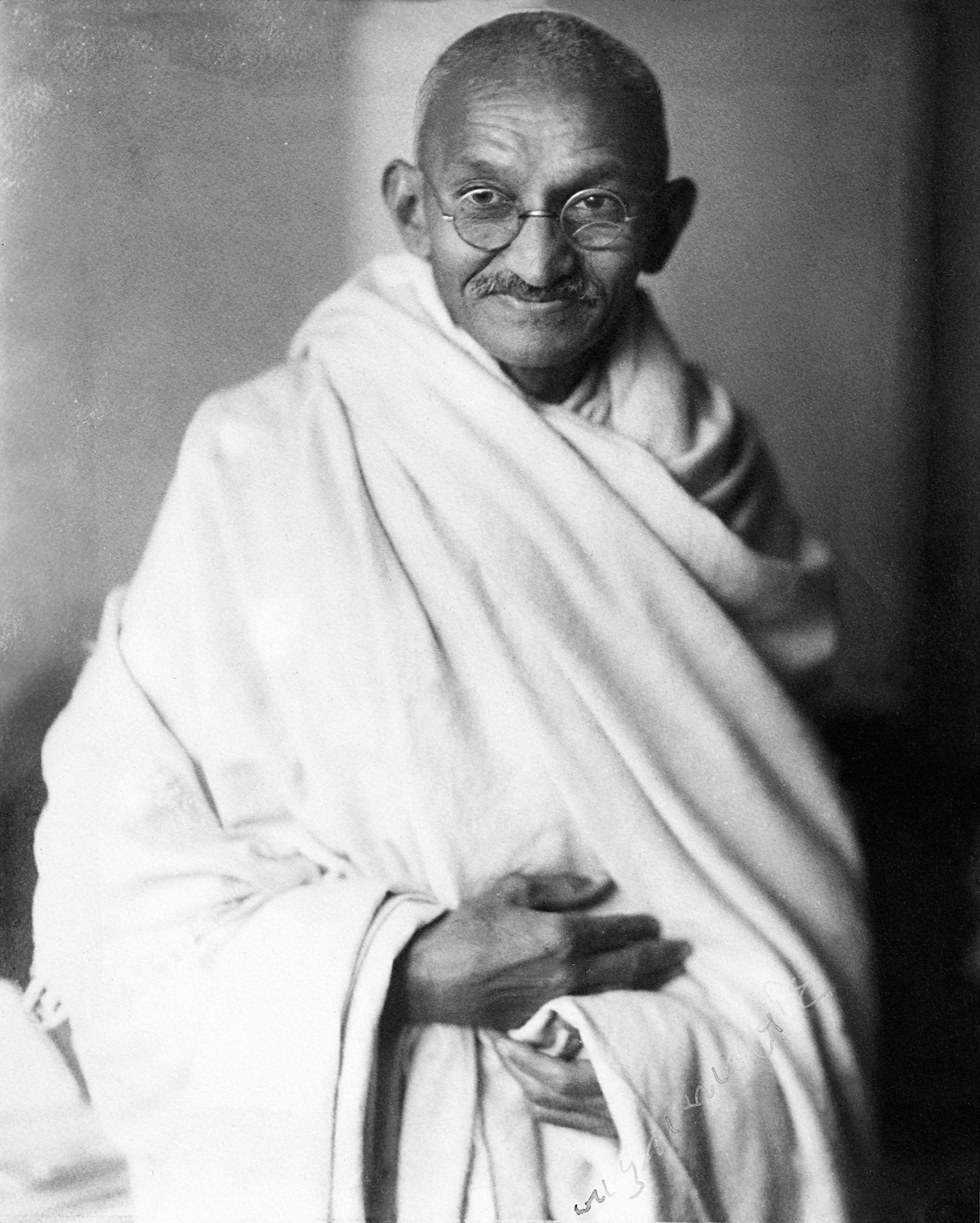
Gandhi, Mahatma
1869–1948
Elliott & Fry. Public domain via Wikimedia Commons.
Gandhi's framework centered nonviolence, religious pluralism, civil disobedience, voluntary simplicity, and defense of the poor against industrial capitalism — and he was assassinated by a Hindu nationalist for being too pluralistic.38 Paxton's political mode is opposite Gandhi on nearly every axis (the 1 is among the lowest scores in the table); Talarico tracks Gandhian political ethics closely, with deductions for conventional foreign policy and pro-business framing.
Issue
Paxton
Talarico
Nonviolence (ahimsa)
Hurts
Mixed
Paxton: Hurts · Talarico: Mixed
Ahimsa is the foundational Gandhian principle; Paxton's combative prosecutorial rhetoric runs against it, while Talarico's stated commitment to civility even with opponents reads as partial alignment but his conventional foreign-policy posture (Gandhi was a pacifist) keeps it mixed.
Religious pluralism
Hurts
Helps
Paxton: Hurts · Talarico: Helps
Gandhi was assassinated by a Hindu nationalist precisely because he refused religious-majoritarian politics; Paxton's religious-majoritarian framing and prosecution of Muslim institutions land on the assassin's side of that line, while Talarico's explicit church-state separation and defense of minority faiths track Gandhi's pluralism.
Anti-imperialism
Hurts
—
Paxton: Hurts · Talarico: —
Gandhi built his career opposing imperial power; Paxton's posture toward federal and state coercion (Annunciation House, EPIC Ranch, DACA litigation) sits closer to the imperial pole. Talarico has not made anti-imperialism a defining theme and is not a strong factor here either way.
Civil disobedience as moral practice
Hurts
Helps
Paxton: Hurts · Talarico: Helps
Gandhi treated civil disobedience as a tool of conscience; Talarico's framing of protest and moral witness in immigration and church-state debates fits that tradition, while Paxton has used legal authority to suppress dissent — the Annunciation House investigation is the precise inverse of Gandhi's protect-the-conscientious-actor stance.
Voluntary simplicity / anti-corruption
Hurts
Helps
Paxton: Hurts · Talarico: Helps
Gandhi linked personal simplicity to political honesty; Paxton's settled 2024 securities case (no admission of guilt), gifts allegations aired during the 2023 impeachment, and impeachment for abuse of office sit at the opposite pole, while Talarico's anti-corruption platform and modest personal profile track the Gandhian standard.
Defense of the poor against industrial capitalism
Hurts
Mixed
Paxton: Hurts · Talarico: Mixed
Gandhi was skeptical of industrial scale and protective of the rural poor; Paxton's alignment with extractive industries cuts against this, while Talarico's anti-poverty platform helps but his broader pro-business framing keeps it mixed — Gandhi was deeply skeptical of industrial scale, not just of bad employers.
Prosecution of religious minorities
Hurts
Helps
Paxton: Hurts · Talarico: Helps
Gandhi treated the protection of religious minorities as the central test of a pluralist polity; Paxton's investigations of CAIR, EPIC, and Annunciation House are the kind of state action Gandhi died opposing, while Talarico's explicit defense of those same Muslim and immigrant-faith institutions sits squarely on Gandhi's protective side.
Foreign-policy posture
Hurts
Hurts
Paxton: Hurts · Talarico: Hurts
Gandhi was a pacifist; Talarico's more conventional alliance-and-deterrence foreign-policy posture costs him points on a strict Gandhian test, while Paxton's hawk-populist alignment sits even further from Gandhi's nonviolence on this specific foreign-policy axis.
Sources
- Ken Paxton for U.S. Senate, official campaign issues page, accessed May 2026. (full list)
- Talarico for Texas, official campaign issues pages (taxes, education, healthcare, immigration, social media/AI, freedom-family-faith, public-safety-justice, corruption-democracy, labor-business), accessed May 2026. (full list)
- Gandhi, Hind Swaraj (1909); My Experiments with Truth (1927); satyagraha framework; assassination by Hindu nationalist Nathuram Godse (1948). (full list)