Scoring · Founding fathers
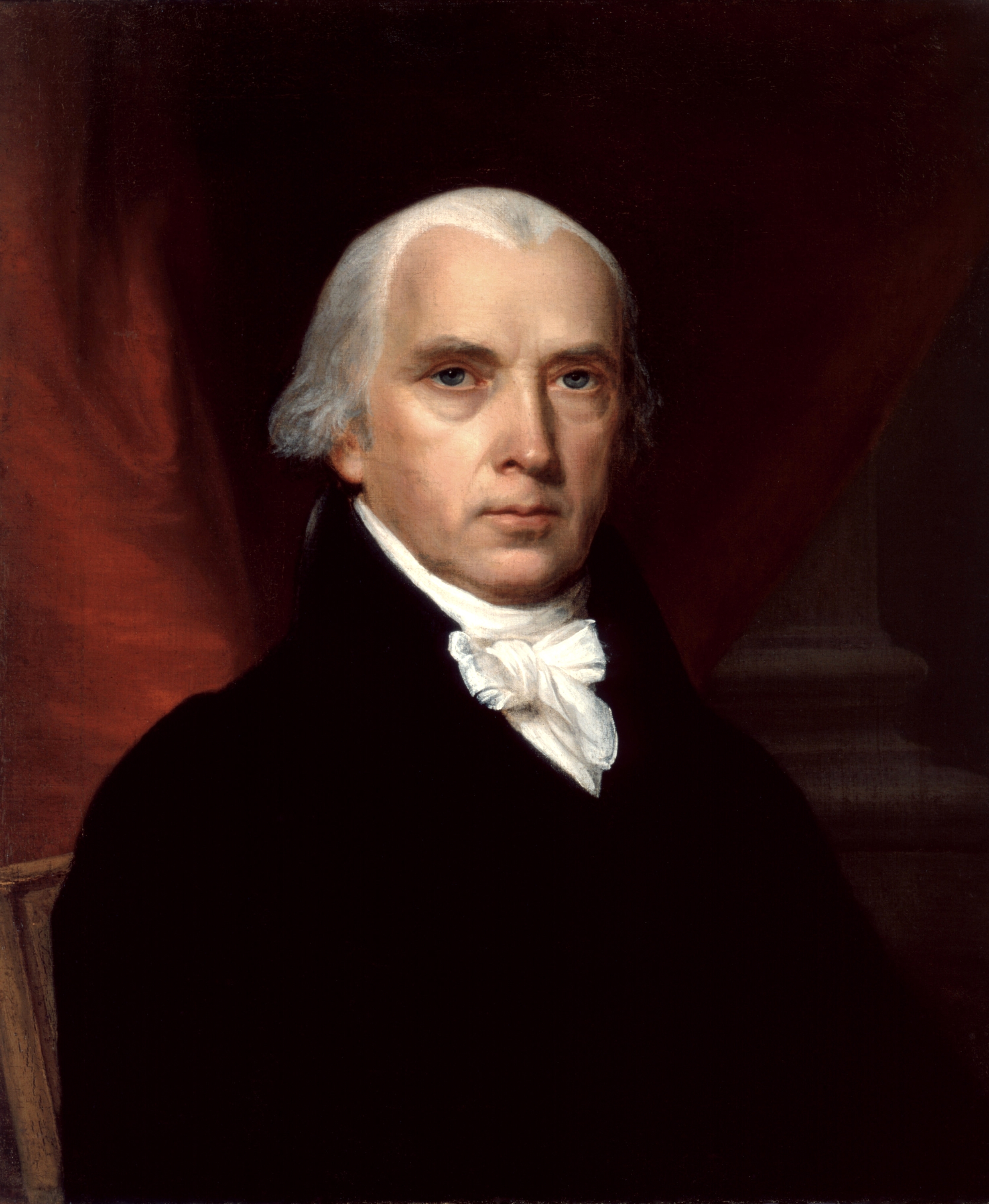
Madison, James
1809–1817
John Vanderlyn. Public domain via Wikimedia Commons.
Madison's Memorial and Remonstrance Against Religious Assessments (1785), Federalist 10 on faction, and Federalist 51 on separated powers117 are the precise lenses for Abbott's church-state and quorum-removal posture. Abbott's SB 10/SB 11 package replays the Virginia general-assessment debate Madison defeated, and his DPS-arrest response is closer to the majoritarian abuse Madison built tools against; Hinojosa's quorum break is the procedural posture Madison anticipated.
Issue
Abbott
Hinojosa
State-funded religious instruction (SB 10 Ten Commandments)
Hurts
Helps
Abbott: Hurts · Hinojosa: Helps
Madison's Memorial and Remonstrance is the most thoroughgoing founding-era argument against state-funded religious instruction; Abbott's SB 10 classroom mandate44 replays nearly verbatim the general-assessment debate Madison defeated, while Hinojosa's no-vote tracks the Memorial.
State-authorized prayer (SB 11)
Hurts
Helps
Abbott: Hurts · Hinojosa: Helps
Madison's argument against the Virginia assessment treated state authorization of religious exercise as establishment in substance; Abbott signed SB 11 authorizing prayer time, while Hinojosa voted no.
Majoritarian faction (Federalist 10) — Aug 2025 DPS-arrest
Hurts
—
Abbott: Hurts · Hinojosa: —
Federalist 10 worried about majorities running over minorities through ordinary procedure; Abbott's DPS-arrest response to the quorum break29 is closer to the majoritarian abuse Madison built tools against. Hinojosa is the minority being protected on this row, so the row scores Abbott's posture rather than hers.
Separated powers as procedural defense (Federalist 51 / quorum)
Hurts
Helps
Abbott: Hurts · Hinojosa: Helps
Federalist 51's defense of separated powers anticipated procedural tools that slow majoritarian action; Hinojosa breaking quorum to slow a partisan gerrymander33 is exactly that posture, while Abbott's removal threat against the breaking caucus29 treated a Madisonian counter-tool as a target for executive force.
Memorial and Remonstrance / general assessment debate
Hurts
Helps
Abbott: Hurts · Hinojosa: Helps
Madison's 1785 Memorial and Remonstrance defeated Virginia's general-assessment bill for religious instruction; Abbott's SB 10 classroom mandate and SB 11 prayer-time authorization44 replay nearly verbatim the policy Madison built the foundational anti-establishment argument against, while Hinojosa's no-vote and AG-cost amendment48 carry the Madisonian posture forward.
Federalist 51 separated-powers in practice
Hurts
Helps
Abbott: Hurts · Hinojosa: Helps
Federalist 51 defended the procedural tools by which minorities slow majorities; Hinojosa's quorum break is exactly the kind of procedural posture Madison built the constitutional architecture to enable, while Abbott's DPS-arrest response is closer to what Madison worried majorities would do to those tools.
Tools-for-faction-defense (Federalist 10)
Hurts
Helps
Abbott: Hurts · Hinojosa: Helps
Federalist 10 located the cure for faction not in suppressing minorities but in structural design; Abbott's August 2025 removal and arrest threats29 treated a structural minority defense as illegitimate, while Hinojosa's procedural use of the quorum rule fits Madison's idea of how minorities defend themselves under separated powers.
Sources
- Gina Hinojosa for Texas Governor, official campaign priorities page, accessed May 2026. (full list)
- Texas Tribune, 'Abbott threatens removal of Democrats who broke quorum to block redistricting,' Aug. 3, 2025. (full list)
- NPR, 'A Texas Democratic lawmaker on their efforts to stop Republican redistricting plans,' Aug. 4, 2025 — Hinojosa interview. (full list)
- Texas Tribune, 'Ten Commandments in Texas schools: SB 10 explained,' May 24, 2025. (full list)
- KXAN, 'Texas House advances bill to require Ten Commandments in every classroom after vote on the Sabbath,' May 2025 — covers Hinojosa amendment shifting defense burden to AG. (full list)
- James Madison, Memorial and Remonstrance Against Religious Assessments (1785); Federalist 10 and 51. (full list)