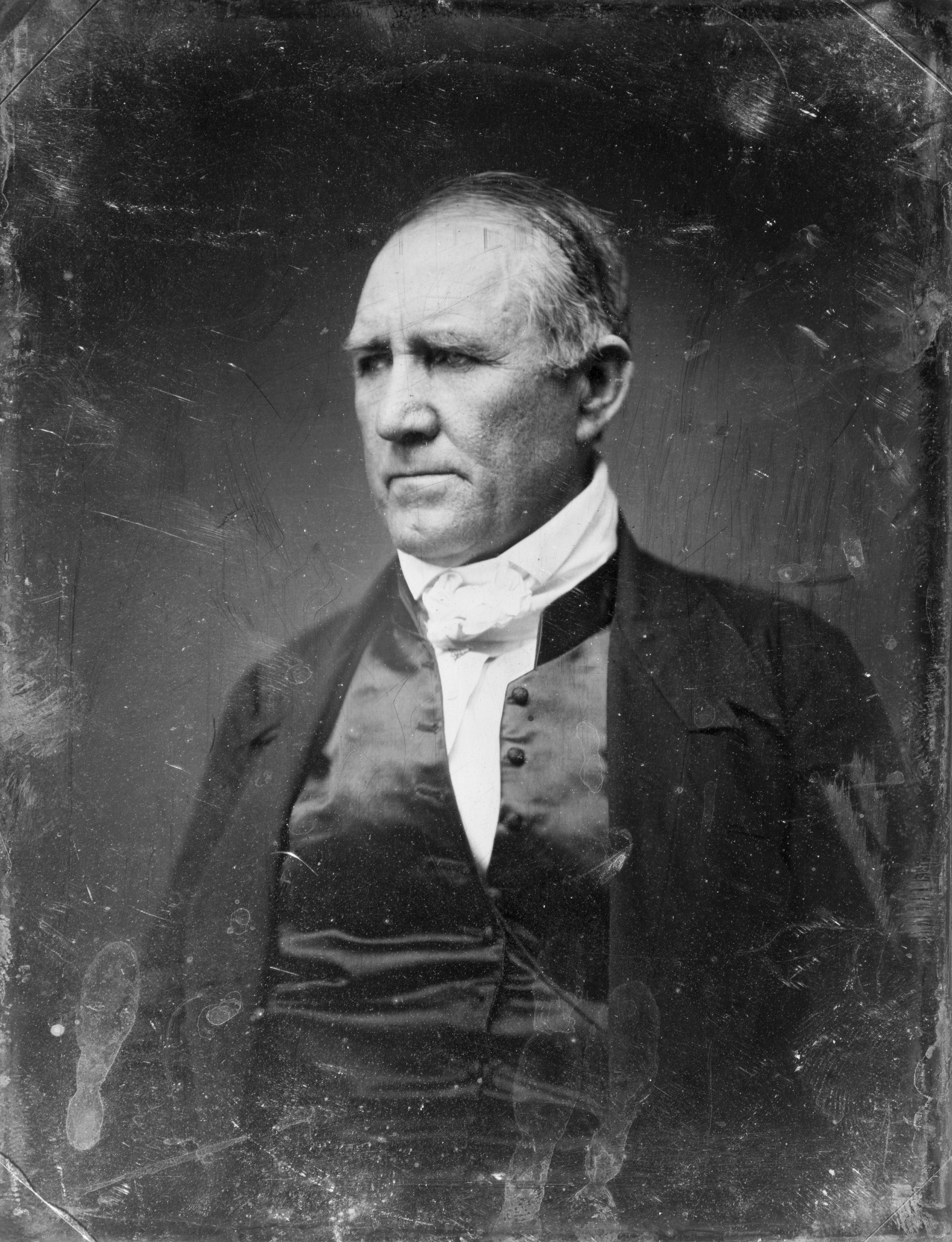
Sam Houston refused the Confederate oath in 1861 and lost his governorship rather than swear loyalty to a regional faction.55 The framework rewards Union-over-faction commitment, civility, and refusal to demonize opponents — Paxton's whole career is built on factional loyalty, while Talarico's anti-faction reforms and civility track Houston's institutional instinct.
Issue
Paxton
Talarico
Union-over-faction commitment (1861 refusal of Confederate oath)
Hurts
Helps
Paxton: Hurts · Talarico: Helps
Houston let himself be deposed as governor rather than swear loyalty to a regional faction; Paxton's whole political identity is built on factional loyalty to the Trump-personalist movement, while Talarico's institutional reforms and refusal to demonize the other side track Houston's Union-first instinct.
Warning against 'war of self-immolation' / faction-driven ruin
Hurts
Helps
Paxton: Hurts · Talarico: Helps
Houston told Texans secession would bring 'a war of self-immolation' and that the South was 'rushing upon ruin' — a warning about faction-driven self-destruction; Paxton's primary-campaign attacks on a sitting Republican senator are the same self-destructive intra-coalition pattern, while Talarico's explicit refusal to demonize fellow Texans and his coalition-building framing track Houston's anti-faction-ruin instinct.
Willingness to pay personal cost for principle (Huntsville house arrest)
Hurts
Helps
Paxton: Hurts · Talarico: Helps
Houston spent his last years under house arrest by Confederate-aligned authorities and died in 1863 still convinced the Union was worth sacrificing his career to preserve; Paxton's record shows the opposite — power preserved through factional alignment regardless of institutional cost — while Talarico's 2021 quorum-break walkout to Washington over voting rights cost him politically and tracks Houston's principle-over-position instinct.
Attacks on a sitting Republican senator
Hurts
—
Paxton: Hurts · Talarico: —
Houston's career taught that intra-coalition demonization corrodes the institution; Paxton's primary built around attacking a sitting Republican senator is the precise pattern Houston spent his career fighting. Talarico is in a different primary and not a factor on this axis.
Trump-personalist political mode
Hurts
Helps
Paxton: Hurts · Talarico: Helps
Houston refused to swear loyalty to a regional faction even when it cost him the governorship; Paxton's career is built on personal loyalty to a political movement, while Talarico's institutional-reform framing and refusal to organize around a single personalist leader sits on the Houston side of this axis.
Civility / 'coffee with the NRA member' instinct
Hurts
Helps
Paxton: Hurts · Talarico: Helps
Houston modeled civility across deep disagreement; Talarico's literal 'coffee with the NRA member' framing and refusal to demonize political opponents tracks that posture, while Paxton's personal-attack campaign rhetoric against fellow Republicans and Democrats alike runs against Houston's civility-across-disagreement instinct.
Anti-faction reforms (term limits, SCOTUS ethics)
—
Helps
Paxton: — · Talarico: Helps
Houston's institutional commitment was to systems that survive individual ambition; Talarico's term-limit and SCOTUS-ethics agenda2 is the modern policy translation of that instinct. Paxton has not proposed structural anti-faction reforms and does not register as a positive on this narrow row.
Property / federalism conservatism
Helps
Hurts
Paxton: Helps · Talarico: Hurts
Houston was personally conservative on property and federalism; Talarico's expanded federal economic agenda runs against that side of the Houston framework, while Paxton's state-AG federalism litigation and property-rights posture align with Houston's substantive policy conservatism (even as his factional behavior fails Houston elsewhere).
Sources
- Ken Paxton for U.S. Senate, official campaign issues page, accessed May 2026. (full list)
- Talarico for Texas, official campaign issues pages (taxes, education, healthcare, immigration, social media/AI, freedom-family-faith, public-safety-justice, corruption-democracy, labor-business), accessed May 2026. (full list)
- Sam Houston, speeches and letters opposing Texas secession (1859-1861); 'A Nation Divided Against Itself Cannot Stand' speech, Brenham, March 1861; James L. Haley, 'Sam Houston' (2002); refusal to take Confederate oath, March 16, 1861. (full list)